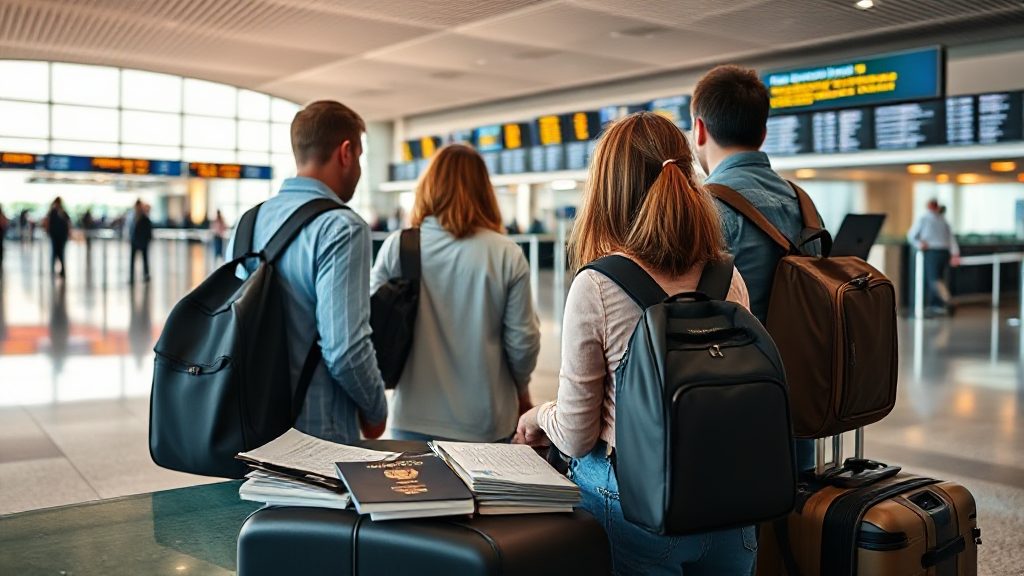
Vanuatu Passport Index Positions: Questions Readers Keep Asking
Vanuatu Passport Index Positions: Questions Readers Keep Asking
The most-asked question is simple: how far can a Vanuatu passport actually take a family before anyone needs a visa? The short answer is that the passport opens a practical set of destinations across the Pacific, Asia and parts of the Americas, but the exact count depends on whether you are counting visa-free entry, visa-on-arrival or electronic authorisation. Because families often travel with mixed passports and children, the useful answer is less about a single number and more about which doors open without paperwork. More questions follow, answered in the order readers tend to ask them.
If you are planning a trip with children or a spouse who holds a different passport, the Vanuatu Travel Access family guide is the practical starting point for matching each traveller to the right entry rule before you book anything.
How many countries can a Vanuatu passport holder enter without a visa?
Vanuatu passport holders can enter a broad group of countries without applying for a visa in advance, and the total usually quoted sits in the range of roughly 90 to 130 destinations depending on the index and the year. That range is wide because index publishers count different things: some include visa-on-arrival and electronic travel authorisations, while others count only true visa-free entry. For family planning, the safer habit is to treat any single figure as an estimate and confirm the rule for your specific destination and passport before departure.
What matters more than the headline number is the quality of access: whether the destinations you actually want to visit are on the list, and whether children and spouses qualify under the same rule. A passport with 120 entries is not useful if the three countries on your family itinerary all require visas.
Which regions does a Vanuatu passport open most easily?
Access is strongest close to home. Pacific neighbours, including several Melanesian and Polynesian states, are typically straightforward for Vanuatu citizens, which makes regional family travel and business trips the least bureaucratic option. Beyond the Pacific, a meaningful set of Asian and African destinations also appears on visa-free or visa-on-arrival lists, though the mix shifts as bilateral agreements are updated.
Access to Europe and North America is more limited. Schengen countries and the United Kingdom generally require a visa for Vanuatu passport holders, and the United States does as well. That does not close those destinations to families, but it means you should budget time for an application rather than assuming the passport alone is enough.
- Pacific: the widest visa-free and visa-on-arrival coverage.
- Asia: a useful but uneven set of visa-free and arrival-visa destinations.
- Africa and the Middle East: selected countries, often visa-on-arrival.
- Europe and North America: mostly visa-required, with advance applications.
Does the index position change from year to year?
Yes, and families should expect it to. Passport index rankings move when countries sign reciprocal agreements, suspend arrangements or tighten border rules, and Vanuatu’s position has shifted in recent years as several partners reviewed their access terms. A rank that was accurate last season may not reflect the current rule at your destination.
The practical consequence is that you should check the entry requirement for each country on your itinerary close to your travel date, not months in advance when you first start dreaming about the trip. If you are booking a multi-country family route, build in a re-check a few weeks before departure so that a changed rule does not derail a connecting flight.
What documents does a family need beyond the passport?
Even where a visa is not required, border officers still expect a complete travel file. For a family, that usually means every traveller has a passport valid for at least six months beyond the planned return, plus evidence of the purpose of the trip. Officers commonly ask about onward or return tickets, accommodation bookings and proof of sufficient funds for the stay.
Children add a layer. If a child is travelling with one parent, or with a guardian who is not a parent, some countries ask for a letter of consent or a birth certificate showing the relationship. Carry the paperwork even when it is not formally requested, because a missing document at a family immigration desk is far harder to resolve than at home.
Can a spouse or child with a different passport travel on the same itinerary?
They can, but each traveller is assessed against their own nationality, not the family’s. A Vanuatu passport holder may enter a country visa-free while a spouse holding another passport needs a visa for the same trip, and the airline will check each person separately at check-in. Mixed-passport families should map the requirements traveller by traveller before booking.
This is also where a second passport becomes relevant. Some dual nationals choose which passport to present at check-in and at the border to simplify the family’s paperwork, but the choice must be consistent with the destination’s rules and with the passport used to book the ticket. Getting this wrong is a common cause of denied boarding.
How do transit stops affect a family’s entry requirements?
Transit is the question families underestimate most. A short connection through a hub country can still require a transit visa if you leave the international zone, change airports or overnight, and some countries require a transit visa even when you stay airside. Because children tire quickly and connections can stretch, it is easy to plan an airport change without checking the transit rule.
Before booking, confirm three things for every stop: whether you remain in the international transit area, whether the airport changes, and whether the transit country requires a visa for Vanuatu passport holders. If any answer is uncertain, treat the stop as an entry and check the full requirement.
What about Schengen and UK trips with a Vanuatu passport?
Schengen countries and the United Kingdom generally require Vanuatu passport holders to obtain a visa before travel, so these trips need planning rather than a spontaneous booking. Applications typically ask for proof of funds, travel insurance, accommodation and a clear itinerary, and family applications may need each traveller’s documents prepared separately even when submitted together.
Allow more time than you think you need. Appointment availability and processing times vary, and a family of four cannot rely on one person’s timeline. Start the visa file before you pay for flights, so that a delay does not leave you holding non-refundable tickets.
Frequently asked questions about Vanuatu passport travel for families
Is a visa-free entry the same as visa-on-arrival?
No. Visa-free means you can enter without applying in advance, while visa-on-arrival means the visa is issued at the border and may involve a fee, a queue or proof of funds. Both appear in index counts, which is why totals differ between publishers.
Do children need their own passport and visa?
Yes, each child needs a personal passport, and any visa requirement applies to the child individually. Do not assume a child can be added to a parent’s application without a separate document.
How early should a family check entry rules before flying?
Check when you book and again about four to six weeks before departure. That window catches most rule changes while leaving time to apply for a visa if one becomes necessary.
Does a second passport help a Vanuatu family travel more easily?
It can, because each traveller may use the passport that best matches the destination’s rules. The key is consistency between the passport used for booking and the one presented at check-in and at the border.
